
Synergex
This workhorse alkanolamine has been in use for decades. It helps extend fluid life and can easily be incorporated into oil-in-water (O/W) emulsions.

Eastman's Synergex line of amine additives significantly boosts performance while extending the life of your metalworking fluids.
| Amine | Fluid type(s) | Equivalent weight | Odor | LD50 (oral/rat) mg/kg |
|---|---|---|---|---|
| Synergex | O/W emulsion, synthetic | 117 | Slight | 1150 |
| Synergex T | Synthetic | 161 | None | 4250 |
| Synergex T Plus | O/W emulsion, synthetic, straight oil | 217 | None | 2823 |
| Synergex LA | O/W emulsion | 173 | Light | 550 |
This workhorse alkanolamine has been in use for decades. It helps extend fluid life and can easily be incorporated into oil-in-water (O/W) emulsions.
Superior extension of fluid life. Easy incorporation into oil-in-water (O/W) emulsions.
The hydrophilic tertiary amine alternative to Synergex. Provides for longer life in full synthetic fluids along with excellent corrosion inhibition.
As the newest addition to our Synergex product line, Synergex LA serves as a highly effective hydrophobic alkanolamine for hydrophobic/hydrophilic amine combinations.
| Amine | NBP℃ | % VOC | HLB | Typical use level % | Biosynergy | Oil/water | pKa |
|---|---|---|---|---|---|---|---|
| Synergex | 200 | 99 | Mid-range | 4-6 | Excellent | Amphiphilic | 10 |
| Synergex T | 285 | <8 | Hydrophilic | 2-10 | Good | Water | 9 |
| Synergex T Plus | >300 | 0 | Hydrophobic | 2-6 | Excellent | Oil | 9 |
| Synergex LA | 230 | 99 | Hydrophobic | 4-8 | Good | Oil | 10 |
NBP = normal boiling point % VOC per ASTM-D1868 NK = not known
Typical use level designates the typically optimal amount to use in a concentrate, which in turn will be diluted to ≈ 5% in the working fluid.
| Synergex T | synergex T Plus | MDEA | |
|---|---|---|---|
| Boiling point,℃ | 285 | 300@1 Torr | 243.3 |
| Melting point,℃ | -70 | -25 | -21.0 |
| Amine mequiv per gram | 6.2 | 4.61 | 8.40 |
| mg KOH equiv. per gram | 8.91 | 8.74 | 8.68 |
| pKa | 8.91 | 8.74 | 8.68 |
MDEA (Methyldiethanolamine) is an ideal lower odor, lower VOC, economically priced alkanolamine that can be used to bring the pH of the operating fluid up to 9. Use MDEA instead of MEA, DEA and TEA to help improve performance at a reasonable cost.
Concentrates formulated with 3% Synergex T Plus and either 10% phenoxyethanol or 10% phenoxypropanol type biocontrol agent are recommended.
Concentrates formulated with 5% Synergex T and either 10% phenoxyethanol or 10% phenoxypropanol type biocontrol agent are recommended.
| Synergex T Plus | 3% |
| MDEA | 10% + additional amount needed to reach desired pH in operating fluid |
| Isononanoic acid* | 8% |
| Polyalkylene glycol | 20% |
| Phenoxyethanol | Up to 10% |
| Water | ≈ 50% |
The above concentrate can be diluted 20/1 to provide the operating fluid. The addition of preferred corrosion inhibiting additive(s) and/or packages is recommended. Note that tertiary diethanolamines like Synergex T and Synergex T Plus are known to provide longer life in fully synthetic metalworking fluids (see; Golec, K.; Hill, E.C.; Kazemi, P.; Skold, R. O.; Tribology International 1989, 22(6), 375 – 382.)
Synergex™ products can extend coolant life and improve the performance of most water-based metalworking fluids.
Eastman's Synergex™ family of multi-functional amine additives can be used in combination with other amines or used by themselves in a concentrate, used tank side, or used to make corrosion inhibiting salts and amides. Synergex™ products can extend coolant life and improve the performance of most water-based metalworking fluids.
One of the easiest ways to insert Synergex into synthetic and semi-synthetic formulations is to prepare a Synergex dicarboxylate salt rust inhibitor. The following example can easily be prepared by simple blending without the use of an outside source of heat:
Start with water and blend in the Synergex™, then add the Corfree® M1 until most of the granules are dissolved. Mix until clear.
| Amine carboxylate salt | Lbs | % |
|---|---|---|
| Water | 200 | 47.06 |
| Corfree M1® * | 108 | 25.41 |
| Synergex | 117 | 27.53 |
* Corfree® is a registered trademark of INVISTA S.a.r.l.
If this Synergex™ salt is used to make up 24% of the synthetic or semi-synthetic formulation, then the concentration of Synergex™ in the final concentrate will be 6%, ideal for optimizing all the benefits of a synergistic amine. The above Synergex™ salt will be replacing rust inhibitors that typically contain only 5% to 25% water so adjust your formula accordingly.
| Ingredient | wt % | |
|---|---|---|
| 1 | Water | 19.00 |
| 2 | Synergex® | 9.00 |
| 3 | Corfree® M1 | 8.00 |
| 4 | Anti-Foam | 0.15 |
| 5 | Sodium TolyTriazole 50% | 0.10 |
| 6 | EDTA 40% | 0.10 |
| 7 | DIPA Oleamide 2/1 molar ratio | 20.00 |
| 8 | Low Rosin Tall Oil Fatty Acid | 8.00 |
| 9 | Naphthenic Oil 100 SUS | 22.00 |
| 10 | High Mol Wt Fatty Ester | 9.00 |
| 11 | PEG 600 monotallate | 1.00 |
| 12 | 4 mole Ethoxylated Alcohol | 3.00 |
| 13 | Fungicide | 0.65 |
| Total: | 100.00 |
The Semi-Synthetic formula with a Synergex™ salt rust inhibitor was compared to a Semi-Synthetic formula made from DCHA and another Semi-Synthetic formula with a commercial TEA/Primary amine based Boramide. All three formulas showed no rust in distilled water at a 5% dilution in a typical cast iron chip on filter paper rust test. The aluminum leaching results were very favorable to Synergex™ containing semi-synthetics. Also in the cobalt leach, the Synergex™ containing synthetics did very well. Lastly, the Cast Iron Chip rust testing showed that at the concentrations necessary for long coolant life (5% dilution), there is no trace of rust.
Synergex™ neutralizing amine additives¹ have anti-rust properties superior to those of commodity ethanolamines such as monoethanolamine (MEA) & triethanolamine (TEA), and they will tolerate higher carboxylate contents (with less water) when used in a water soluble metalworking fluid rust inhibitor concentrate. One such formula has been used with self emulsifying esters (SEE's), reverse block polymers and tramp oil rejecting emulsifiers in semisynthetic metalworking fluid concentrates.
| Component | Description | Weight% | Base val | Wt eq | Base eq total |
|---|---|---|---|---|---|
| Water | Water | 20 | 119.75 | ||
| Synergex | Amine | 25 | 479 | 149.6 | 269.35 |
| MIPA* | Amine | 20 | 748 | ||
| Acid val. | Acid eq total | ||||
| Corfree® M1 | 35 | 509 | 178.15 | 178.15 | |
| Base/acid ratio | |||||
| Total | 100 | 1.5 |
*Monoisopropanolamine
*Corfree® is a registered trademark of INVISTA S.a.r.l.
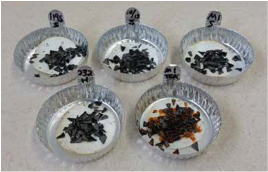
Note that when the acid and base values are taken into consideration, the base to acid ratio is 1.5 to 1. This ratio will be maintained throughout the study. There is an unusually high level of di-acid content in this rust inhibitor, and yet it remains a liquid at room temperature. There is no need to store this product in a "hot box" prior to blending it into a metalworking fluid. Sebacic acid, a readily available potential substitute for Corfree® M1, was used in this study. However, there are other diacids which can be considered, including dodecanedioic acid (DDDA). Note that DDDA is the majority component of Corfree® M1, and DDDA is commercially available (and forecasted to be available for the foreseeable future).² Several diacids and mixtures of diacids, neutralized with varied amines, were studied for their corrosion inhibition properties (see table 2). Five inhibitor packages were formulated @15% (w/w) concentrations into sample synthetic light cutting & grinding fluids, along with 15% concentration of TEA and 10% polyalkylene glycol 660, with a balance of water (~60%). The formulated sample fluids were then diluted to 3% and were used to wet cast iron chips placed on filter paper within aluminum pans. The fluid was removed, and the wet chips were evaporated to dryness overnight. Visual results of overnight corrosion are displayed in Figure 1. Note that visual inspection of iron chips from various diacids neutralized with the Synergex-MIPA combination show no corrosion, whereas the chips exposed to TEA/MEA neutralized Corfree® M1 fluid display significant rust.
¹ http://www.eastman.com/Brands/Synergex/Pages/Overview.aspx
² http://www.grandviewresearch.com/industry-analysis/dodecanedioic-acid-ddda-industry
| #1 | #2 | #3 | #4 | #5 | |
|---|---|---|---|---|---|
| Description | Emerox® 1195 Synergex™ |
C10 & C12 Synergex |
Corfree® M1 Synergex |
Aqualox® 232H | Corfree® M1 MEA TEA |
| Water | 20 | 20 | 20 | %not known | 18 |
| Emerox® 1195 | 35 | 20 | 18 | ||
| DDDA | 24 | 20 | |||
| Sebacic acid | 11 | 20 | |||
| Corfree® M1 | 20 | %not known | 35 | ||
| Synergex™ | 25 | 20 | 25 | ||
| MIPA | 20 | 20 | 20 | ||
| TEA 99 | 20 | %not known | 27.5 | ||
| MEA | 20 | %not known | 19.5 |
Aqualox® is a registered trademark of the Lubrizol Corporation.
Corfree® is a registered trademark of INVISTA S.a.r.l.
Emerox® is a registered trademark of Emery Oleochemicals GMBH.
Formula 3 Synergex/MIPA/Corfree® M1 is the same as the rust inhibitor with Synergex/MIPA/Corfree® M1 from table 1
Because only formula #5 showed rust, we conclude that Synergex/MIPA is a better amine combination than TEA/MEA for preventing rust. At 15% by weight in the coolant concentrate, the amount TEA at 6% dilution of the metalworking fluid is 9,000 ppm. The contribution of MIPA and Synergex from 15% of the rust inhibitor is 2,722 ppm, sufficient for long life activity. The rust testing was done at 3% just to stress the fluid otherwise there would be no rust at all with the fresh dilutions. Because these formulas represent synthetic metalworking fluids, there was no oil in any of the finished fluid formulas. Using Synergex and MIPA to make up the rust inhibitor instead of the more common use of TEA & MEA, allows for not only a more rust resistant formula but also one that has long life properties.
An excellent hydrophobic alkanolamine for hydrophobic/ hydrophilic amine combinations. Synergex LA, especially in combination with a hydrophilic amine, can allow for exceptionally stable emulsions. Combining hydrophobic tertiary amines with hydrophilic primary amines can provide for greater fluid stability than a single amine can on its own. Synergex LA can provide for greatly extended fluid life when combined with MIPA (monoisopropanolamine).
| Component | Grams | wt % | |
|---|---|---|---|
| 1 | Naphthenic oil (Hygold 100) | 75.0 | 50.00 |
| 2 | Soap sulfonate emulsifier (IdaMix D42) | 16.0 | 10.00 |
| 3 | Non-sulfonate emulsifier (Tas-Sol 37N) | 21.0 | 14.00 |
| 4 | DIPA TOFA amide 2:1 (amide 5) | 5.5 | 3.67 |
| 5 | TOFA 28 | 7.5 | 5.00 |
| 6 | Lipophilic amine | 7.5 | 5.00 |
| 7 | Hydrophilic amine or double dose of lipophilic amine | 7.5 | 5.00 |
| 8 | Polymeric ester (Syn-Ester GY-25) | 3.0 | 2.00 |
| 9 | Toly triazole 50% (Preventol CI 7-50) | 0.5 | 0.33 |
| 10 | Antifoam (Surtec KE-131) | 0.3 | 0.20 |
| 11 | Biocide (Bioban P-1487) | 1.0 | 0.67 |
| 12 | Odorant (Ida-Soil SM 101) | 0.6 | 0.40 |
| 13 | Fungicide (Troy Shield FX 40) | 0.6 | 0.40 |
| 14 | Carboxylate rust inhibitor (Aqualox 232H) | 5.0 | 3.33 |
| Grand totals | 100.00 |
As the following table illustrates, Synergex LA provides faster wetting time on aluminium when compared to many other amines. A balanced combination of Synergex LA with MIPA can provide for greatly extended fluid life (see formula below).
| Cast iron chips on paper | Wetting time (seconds) hard water | Aluminum wetting time (seconds) soft water |
|---|---|---|
| TEA(control) | 450 | 49 |
| DCHA | 155 | 40 |
| Synergex LA | 141 | 29 |
| Synergex T Plus | 210 | 43 |
| Synergex T | 389 | 79 |
| MDEA | 908 | 210 |
| HBHEBA | 179 | 67 |
| Coolant formula | % |
|---|---|
| Hygold 100 naphthenic base oil | 55 |
| Ida-Mix D42M sulfonate emulsifier | 15 |
| Tas Sol 37N non-sulfonate emulsifier | 15 |
| Tall oil fatty acid | 5 |
| Amine | 10 |
| Total | 100 |
6% dilution to 6000 ppm amine in fluid
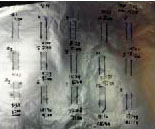
Two drops of diluted fluid are deposited on the aluminum foil and the time to spread out to the prescribed lines is timed and reported as the "seconds aluminum wetting time".
* HOSS emulsion fluid used for studies
IMPORTANT NOTICE: (1)Although the information and recommendations set forth herein are presented in good faith, Eastman Chemical Company and all the related companies responsible for sales make no representations or warranties as to the completeness or accuracy thereof. You must make your own determination of their suitability and completeness for your own use, for the protection of the environment, and for the health and safety of your employees and purchasers of your products. Nothing contained herein is to be construed as a recommendation to use any product, process, equipment, or formulation in conflict with any patent, and we make no representations or warranties, express or implied, that the use thereof will not infringe any patent. NO REPRESENTATIONS OR WARRANTIES, EITHER EXPRESS OR IMPLIED, OF MERCHANTABILITY, FITNESS FOR A PARTICULAR PURPOSE, OR OF ANY OTHER NATURE ARE MADE HEREUNDER WITH RESPECT TO INFORMATION OR THE PRODUCT TO WHICH INFORMATION REFERS AND NOTHING HEREIN WAIVES ANY OF THE SELLER'S CONDITIONS OF SALE. (2)Safety Data Sheets providing safety precautions that should be observed when handling and storing our products are available online or by request. You should obtain and review available material safety information before handling our products. If any materials mentioned are not our products, appropriate industrial hygiene and other safety precautions recommended by their manufacturers should be observed. (3)© 2016 Eastman Chemical Company. Eastman brands referenced herein are trademarks of Eastman Chemical Company or one of its subsidiaries. The ® used on Eastman brands denotes registered trademark status in the U.S.; marks may also be registered internationally. Non-Eastman brands referenced herein are trademarks of their respective owners.
Disclaimer: Information provided by this website including specifications, applications and formulations are based on tests and data supplied by Smart Oil companies, manufacturers or any of our collaborated companies or suppliers, which are believed to be correct and reliable at the time of writing and data update. However, Smart Oil companies, manufacturers or any of our collaborated companies or suppliers make no warranty or responsibility, express or implied, of any kind regarding products, performance, formulations or applications, as operation conditions and application environments are beyond our control, or products will be modified by action of manufacturers or due to change in market environments. Users are herewith expressively requested to conduct test to determine the suitability of our products or product information before use. Furthermore, we regret that we cannot be responsible for informing customers any changes in specifications, formulations, or other technical contents on this website. Also, We hereby state that all product trademarks other than Smart Oil, including trademarks from our suppliers, are the trademarks belonged to the respective companies, or from their sources.